
Introduction
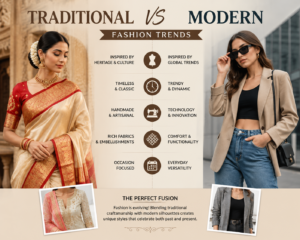
Fashion is constantly evolving, blending cultural heritage with contemporary creativity. While traditional fashion reflects history, identity, and timeless elegance, modern fashion focuses on innovation, comfort, and rapidly changing trends. Today, many people enjoy combining both styles to create unique and expressive looks.
At ClosetWaves, we celebrate every form of fashion — from classic traditional wear to bold modern outfits. In this blog, we will explore the key differences between traditional and modern fashion trends, their advantages, popular examples, and how both styles continue to influence the global fashion industry.
What Is Traditional Fashion?
Traditional fashion refers to clothing styles that represent the culture, history, and customs of a particular region or community. These outfits are often passed down through generations and are worn during festivals, weddings, religious events, and cultural celebrations.
Traditional fashion usually includes handcrafted fabrics, embroidery, unique patterns, and symbolic designs.
Examples of Traditional Fashion Around the World
- Sarees and lehengas in India
- Kimono in Japan
- Hanbok in Korea
- Abaya in the Middle East
- Kilts in Scotland
- Dashiki in Africa
These outfits carry deep cultural meaning and showcase artistic craftsmanship.
What Is Modern Fashion?
Modern fashion focuses on current trends, innovation, functionality, and personal expression. It is influenced by celebrities, social media, designers, streetwear culture, and global fashion movements.
Modern clothing often prioritizes comfort, convenience, and versatility while experimenting with new cuts, fabrics, and styles.
Examples of Modern Fashion Trends
- Oversized hoodies
- Denim jackets
- Streetwear
- Athleisure outfits
- Minimalist fashion
- Sustainable clothing
Modern fashion changes quickly and adapts to lifestyle trends.
Key Differences Between Traditional and Modern Fashion
| Feature | Traditional Fashion | Modern Fashion |
|---|---|---|
| Inspiration | Culture and heritage | Current trends and innovation |
| Fabrics | Handmade and natural fabrics | Mixed and synthetic fabrics |
| Purpose | Ceremonies and cultural events | Daily wear and self-expression |
| Designs | Detailed embroidery and patterns | Minimal, experimental, or trendy |
| Comfort | May be heavier or layered | Often lightweight and practical |
| Trend Cycle | Timeless and long-lasting | Frequently changing |
Advantages of Traditional Fashion
1. Preserves Cultural Identity
Traditional clothing helps keep cultural heritage alive and connects generations.
2. Timeless Beauty
Many traditional outfits remain fashionable for decades because of their elegance and craftsmanship.
3. Handcrafted Excellence
Traditional garments often feature detailed embroidery, weaving, and artisanal techniques.
4. Perfect for Special Occasions
Traditional wear adds richness and beauty to weddings, festivals, and celebrations.
The Rise of Sustainable Fashion
Both traditional and modern fashion are now moving toward sustainability.
Traditional Fashion and Sustainability
Traditional clothing often uses:
- Handwoven fabrics
- Natural dyes
- Long-lasting craftsmanship
Modern Sustainable Trends
Modern fashion brands are focusing on:
- Eco-friendly materials
- Ethical production
- Slow fashion movements
- Recycling and upcycling
Sustainable fashion helps reduce waste and promotes responsible shopping habits.